How to Spot Bad Mystery Shopping
Assignments Before You Accept Them
Bad mystery shopping assignments can cost you more time and effort than they're worth. Not every mystery shopping opportunity is a good one, even when the advertised payment looks attractive. Learning to evaluate an assignment before you accept it can save you hours of unnecessary work and help you become a more profitable mystery shopper.
Over the years, I've learned that the amount of money offered doesn't always reflect the amount of work required. Sometimes an assignment that pays a little more than usual turns out to be one you wish you had never accepted.
Want more help getting started? My book, Take That Job And Mystery Shop It!, walks you through finding assignments, completing shops, writing reports, and avoiding many of the mistakes new shoppers make.
A Business Verification That Taught Me a Lesson
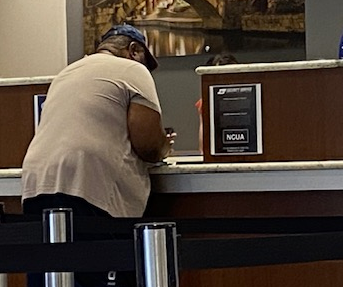
I've completed numerous business verification assignments. These differ from traditional mystery shops because you usually confirm that a business exists and document its operations.
Most business verifications I've completed required answering approximately 10 to 15 questions and taking eight photographs. The payment was usually around $17. I could generally complete the assignment and report in about 30 minutes.
Then I accepted a business verification paying $21.
An additional four dollars sounded reasonable. Unfortunately, I didn't realize what I was getting into.
Instead of the usual 10 to 15 questions, this assignment required answering more than 80 questions and taking over 30 photographs!
Keeping everything organized was difficult. I had to make sure the photographs matched the correct questions and that I hadn't overlooked any required information.
The report alone took me more than two hours to complete.
Compare that with the $17 assignment, which took about 30 minutes. I was earning considerably less for my time despite receiving a higher payment.
In my opinion, that $21 assignment should have paid at least $40.
I learned an important lesson. Before accepting another business verification, I made sure I understood exactly what was required. I never accepted another assignment with that much documentation for such little compensation.
How to Recognize Bad Mystery Shopping Assignments
One of the biggest mistakes mystery shoppers make is accepting an assignment based solely on the advertised payment.
A $30 mystery shop might sound better than a $15 assignment, but the higher-paying opportunity could require several hours of work.
Before accepting an assignment, consider the following:
- Number of questions: Does the report require 15 questions or 100?
- Photographs: Are you expected to take a few pictures or document dozens of items?
- Travel distance: How much time and money will you spend getting there?
- Required purchases: Will you receive reimbursement, and is there a spending limit?
- Reporting requirements: Will the report require lengthy written explanations?
- Deadline: Can you realistically complete everything on time?
These details can make the difference between a worthwhile assignment and a frustrating experience.
Calculate What Your Time Is Worth
Let's compare two hypothetical mystery shopping assignments.
Assignment A: Pays $20 and requires 30 minutes of total work.
Assignment B: Pays $35 but requires three hours of total work.
Assignment A yields an effective rate of $40 per hour, while Assignment B yields about $11.67 per hour.
These figures don't account for travel expenses, taxes, or other costs.
The higher-paying assignment isn't necessarily the better opportunity.
Experienced mystery shoppers learn to estimate total time required, including travel, the visit itself, and completing the report.
Watch Out for Complicated Reports
Some bad mystery shopping assignments aren't obvious until you begin reviewing the instructions.
An assignment may require you to remember exact statements employees made, record specific times, photograph numerous items, and provide detailed written narratives.
There is nothing wrong with these requirements when the compensation is appropriate.
However, a complicated report combined with low payment should make you reconsider accepting the assignment.
Whenever possible, review the questionnaire and instructions before committing. If the requirements aren't available, ask the scheduler for additional information.
Know When to Say No
Mystery shopping companies need dependable shoppers who complete assignments accurately and on time. However, shoppers also need to protect their time.
You don't have to accept every opportunity that appears on a job board.
If an assignment requires too much work for the compensation offered, consider declining it or asking whether a higher payment is available.
Some companies offer bonuses when assignments are difficult to fill. There's no guarantee you'll receive one, but asking politely may be worthwhile.
Become a More Selective Mystery Shopper
Avoiding bad mystery shopping assignments doesn't mean avoiding difficult assignments. Some complicated shops pay very well and provide valuable experience.
The key is understanding what you're agreeing to do before you accept the job.
My $21 business verification taught me that four extra dollars can come with a huge amount of extra work.
The best mystery shopping assignment isn't always the one that pays the most. It's the one that fairly compensates you for your time, effort, and expenses.
The more experience you gain, the easier it becomes to recognize worthwhile opportunities and avoid assignments that simply aren't worth your time.
Related articles:
How to Choose Your First Mystery Shopping Assignment
How to Stay Organized as a Mystery Shopper.
About the Author
I'm Mystery Don (Donald J. Servais, Jr.), and I've completed mystery shopping assignments for restaurants, hotels, apartment communities, automobile dealerships, new-home builders, and other businesses.

I created MystShopper.com to share what I've learned from my own experiences, help new shoppers avoid common mistakes, and explain how legitimate mystery shopping really works.
I'm also the author of Take That Job And Mystery Shop It!, which includes beginner-friendly advice, real-world mystery shopping experiences, and a directory of more than 150 mystery shopping companies.
Drawing on my 45-year career in television, I've also written 7 Keys to Success in a Changing Television Industry, a guide for people interested in building a career in television and video.
My goal is simple: honest guidance without the hype.
We're always looking for new faces to visit different places.
Buy the Kindle eBook (instant download)
Buy the Paperback (best field manual)
Buy the Hardcover (durable reference copy)