Hotel Mystery Shoppers:
What to Expect on an Assignment
Hotel mystery shoppers can receive some of the most interesting assignments in mystery shopping. I've seen hospitality assignments ranging from evaluating a valet parking service to spending one or more nights at a hotel.
At first, an overnight assignment can sound like a free vacation.
It isn't quite that simple.
A hotel mystery shopper may evaluate the property from the first contact with the reservation system to the final interaction at checkout. That can mean many observations, receipts, timings, employee interactions, and reporting.
The hotel stay may be enjoyable, but you're there to work.
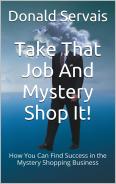
Want more help getting started? My book, Take That Job And Mystery Shop It!, walks you through finding assignments, completing shops, writing reports, and avoiding many of the mistakes new shoppers make.
What Do Hotel Mystery Shoppers Evaluate?

Every assignment is different, so the instructions determine exactly what you need to observe.
A hotel evaluation might include:
- Making the reservation
- Arrival and exterior appearance
- Valet or parking service
- Front-desk greeting and check-in
- Lobby and common-area cleanliness
- Condition and cleanliness of the room
- Employee names or descriptions
- Hotel amenities
- Restaurant or bar service
- Room service
- Housekeeping
- Maintenance response
- Checkout
You may be asked to record exact times for certain interactions.
For example, how long did you wait at the front desk? How quickly did someone answer the telephone? How long did room service take? If you requested assistance, how quickly did an employee respond?
Details that may seem unimportant to an ordinary hotel guest can matter to the client.
Read the Instructions Before You Arrive
Hotel assignments can be complicated, which makes preparation especially important.
Before leaving home, I recommend reading both the assignment instructions and the questionnaire you'll eventually complete.
You don't want to discover after checkout that you were supposed to record something you never noticed.
An assignment might require you to check the exterior, look at signage, visit a particular hotel amenity, order something from a restaurant, or interact with specific employees.
Some assignments may also ask you to make an appropriate service request so the client can evaluate how employees respond. If that's required, follow the scenario provided by the mystery shopping company rather than creating your own test.
And don't carry your questionnaire around where hotel employees can see it. You still have to behave like an ordinary guest.
A Hotel Stay Can Require a Lot of Money Upfront
This is one of the biggest things new shoppers need to understand about hotel assignments.
You may have to pay the expenses yourself before being reimbursed.
Depending on the assignment, that could include the room, taxes, parking, meals, tips, or other required purchases. But don't assume every expense will be reimbursed.
Read the reimbursement limits carefully.
Also find out whether you're receiving a separate shopper fee or being reimbursed primarily for required expenses.
Before accepting an expensive hotel assignment, ask yourself:
How much money will I have to spend upfront?
Exactly which expenses are reimbursed?
Is there a reimbursement limit?
Is there a separate shopper fee?
When does the company normally issue payment?
A hotel stay can involve considerably more money upfront than a typical retail or restaurant mystery shop.
Hotel Mystery Shopping Isn't Just About the Room
A common mistake is to focus only on whether the hotel room is clean.
The client may be evaluating the entire guest experience.
You could interact with a reservation employee, valet attendant, front-desk clerk, restaurant server, bartender, housekeeper, maintenance employee, or another member of the hotel staff.
That means you need a system for remembering names, descriptions, times, and what happened during each interaction.
Hotel assignments are a good example of why taking good notes matters. By the time you check out, you may have accumulated a lot of information.
I recommend reading my article about How to Take Better Notes During a Mystery Shop.
Valet Parking Assignments
Not every hotel assignment requires an overnight stay.
I've seen assignments that focus specifically on valet parking.
A shopper may be asked to arrive at the property, observe the valet interaction, spend a required amount of time at the location, and then return for the vehicle.
The report might ask about the attendant's greeting, appearance, name or description, vehicle handling, ticket or receipt, wait time, and final interaction.
Photographs or documentation may also be required.
As with every mystery shop, don't assume the requirements are the same because you've completed a similar assignment before. Follow the instructions for the specific shop you're doing.
The Report Can Be the Hardest Part
An overnight stay can sound appealing until you see the questionnaire.
A detailed hotel report may cover numerous interactions and require substantial narrative. You could spend considerable time completing the report after you've already spent hours evaluating the property.
That's why I wouldn't accept a hotel assignment based only on the room rate.
Look at the entire job.
A hotel stay that would normally cost several hundred dollars isn't necessarily the same thing as earning several hundred dollars. If most of that amount is reimbursement for expenses you were required to incur, your actual compensation for the work may be much smaller.
Accuracy Matters
Hotel mystery shoppers need to be especially organized because there can be so many details to remember.
Study the questionnaire beforehand. Keep your receipts and required documentation. Record important information discreetly when appropriate. Review your notes before writing the report.
Most importantly, report what you actually observed.
If an employee took ten minutes to respond, report the time. Don't assume why it took ten minutes. If the room wasn't ready when promised, describe what happened rather than guessing about what caused the delay.
The same principle applies whether you're evaluating a hotel, restaurant, apartment community, or retail store.
Hotel mystery shopping can provide some unusual and enjoyable experiences. But the best assignments aren't simply “free vacations.”
They're jobs.
If you understand the expenses, follow the instructions, pay attention throughout the visit, and submit an accurate report, hotel mystery shoppers can take on some of the most interesting assignments in the business.
About the Author
I'm Mystery Don (Donald J. Servais, Jr.), and I've completed mystery shopping assignments for restaurants, hotels, apartment communities, automobile dealerships, new-home builders, and other businesses.

I created MystShopper.com to share what I've learned from my own experiences, help new shoppers avoid common mistakes, and explain how legitimate mystery shopping really works.
I'm also the author of Take That Job And Mystery Shop It!, which includes beginner-friendly advice, real-world mystery shopping experiences, and a directory of more than 150 mystery shopping companies.
Drawing on my 45-year career in television, I've also written 7 Keys to Success in a Changing Television Industry, a guide for people interested in building a career in television and video.
My goal is simple: honest guidance without the hype.
We're always looking for new faces to visit different places.
Buy the Kindle eBook (instant download)
Buy the Paperback (best field manual)
Buy the Hardcover (durable reference copy)