Income Tax Deductions
for Mystery Shoppers
Understanding income tax deductions for mystery shoppers is an important part of treating mystery shopping as a business. You may receive payments for assignments, but you can also have legitimate business expenses that affect the profit you ultimately report for tax purposes.
Taxes can become complicated quickly, so I'm not going to try to turn this article into a tax-preparation course. Instead, let's look at some of the basic tax issues a mystery shopper should understand.
I'm not a tax professional. Over the years, I've relied on professional tax advice for my own mystery shopping business, and I recommend doing the same when you're uncertain about your particular situation.
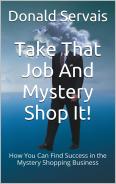
Want more help getting started? My book, Take That Job And Mystery Shop It!, walks you through finding assignments, completing shops, writing reports, and avoiding many of the mistakes new shoppers make.
Income Tax Deductions for Mystery Shoppers and Schedule C
Many self-employed mystery shoppers operating as sole proprietors report their business income and expenses on Schedule C, Profit or Loss From Business, which is filed with Form 1040.
Schedule C provides categories for common business expenses, including car and truck expenses, supplies, professional services, travel, meals, and other business expenses.
The basic idea is fairly simple: keep accurate records of what you earn and what you legitimately spend operating your mystery shopping business.
The details of determining what qualifies—and how much is deductible—are where tax rules become more complicated.
My Interview with a CPA and CGMA
I talked with CPA and CGMA Tim Kiker about what mystery shoppers should know about business expenses and tax deductions. Listen to our conversation below.
Business Equipment and Supplies
Mystery shoppers may purchase items they use for their business.
Depending on your circumstances, these might include office supplies, computer equipment, a printer, software, postage, or other items used for your mystery shopping work.
A cell phone is another good example. If you use the same phone for both personal and business purposes, don't simply assume the entire cost is a business deduction. You need to determine the appropriate business treatment based on how it is used.
The same principle applies to computers and other equipment that have both personal and business uses.
Keep receipts and records showing what you purchased and why it was needed for your business.
Vehicle Expenses Can Be Significant
Driving was one of my biggest mystery shopping expenses.
I've traveled considerable distances to complete assignments, and veteran shoppers sometimes combine multiple assignments into a route.
The IRS provides rules for deducting qualifying business use of a vehicle, including an optional standard mileage method. The mileage rate can change, so I intentionally don't publish a specific rate here. Check the current IRS information when preparing your taxes.
Keep a mileage record showing the date, destination, business purpose, and qualifying business miles.
I used to write down my mileage when I left for an assignment and again when I returned. I kept that information with my receipts.
Today you can accomplish the same thing with a spreadsheet, mileage app, or another reliable recordkeeping system.
Can You Deduct a Home Office?
Some mystery shoppers may qualify for a home-office deduction.
However, simply completing mystery shopping reports at home doesn't automatically mean your home qualifies.
There are specific requirements for business use of the home.
For people who qualify, the IRS currently provides both a regular method and a simplified option for calculating the deduction. The simplified option uses a prescribed amount per square foot, subject to a maximum allowable area.
Because these rules can change, check current IRS guidance rather than relying on an old article—or even an old tax return.
Be Careful With Reimbursements
This is an area where mystery shopping can become confusing.
Suppose you're assigned to evaluate a restaurant. You pay for the meal and the mystery shopping company later reimburses some or all of the authorized purchase. You might also receive a separate shopper fee.
Or perhaps you're offered a route of assignments and the company provides money toward mileage, lodging, airfare, or other expenses.
Don't automatically assume that every reimbursement is tax-free income or that every reimbursed expense can simply be deducted again.
How reimbursements, allowances, business income, and related expenses should be reported can depend on the arrangement and how the expenses are accounted for.
Keep records showing the amount you actually spent, what was reimbursed, and what you received as compensation. If you're unsure how to report it, ask a qualified tax professional.
Don't Forget About Your Records
One of the best things I did was develop a simple recordkeeping system.
I recorded the assignment, mileage, expenses, amount earned, and payment information. I kept receipts so I wasn't trying to reconstruct everything months later.
You don't necessarily need expensive bookkeeping software when you're getting started.
You do need records.
Mystery shoppers can work for numerous companies during a year, which makes organization especially important. Keep track of which company paid you, what assignment the payment covered, and when you received it.
Keep Personal and Business Expenses Separate
If you're serious about mystery shopping as a business, consider keeping your business transactions separate from your personal spending.
A separate bank account can make this easier.
It doesn't magically turn something into a tax deduction. A personal expense doesn't become deductible just because you paid for it from a business account.
The benefit is organization.
When tax season arrives, having your mystery shopping income and expenses clearly documented can save considerable time.
Don't Depend on Old Tax Information
This is particularly important on the internet.
You may find an article that accurately described an income tax deduction five or ten years ago but is no longer current.
Tax forms, mileage rates, limitations, and other rules can change.
Even this article should be treated as general information rather than personalized tax advice.
I think mystery shoppers should learn enough about taxes to maintain good records and understand the basic business issues. But when you're uncertain about whether an expense qualifies or how a payment should be reported, that's when a tax professional earns their money.
Understanding income tax deductions for mystery shoppers doesn't mean trying to find every possible write-off.
It means keeping accurate records, reporting your income properly, identifying legitimate business expenses, and being able to support what you put on your tax return.
About the Author
I'm Mystery Don (Donald J. Servais, Jr.), and I've completed mystery shopping assignments for restaurants, hotels, apartment communities, automobile dealerships, new-home builders, and other businesses.

I created MystShopper.com to share what I've learned from my own experiences, help new shoppers avoid common mistakes, and explain how legitimate mystery shopping really works.
I'm also the author of Take That Job And Mystery Shop It!, which includes beginner-friendly advice, real-world mystery shopping experiences, and a directory of more than 150 mystery shopping companies.
Drawing on my 45-year career in television, I've also written 7 Keys to Success in a Changing Television Industry, a guide for people interested in building a career in television and video.
My goal is simple: honest guidance without the hype.
We're always looking for new faces to visit different places.
Buy the Kindle eBook (instant download)
Buy the Paperback (best field manual)
Buy the Hardcover (durable reference copy)