Restaurant Mystery Shopper:
How You Can Get Started
Working as a restaurant mystery shopper can be an enjoyable way to get started in mystery shopping. I've completed assignments at different types of restaurants over the years, and they can range from a quick visit for a simple meal to a detailed dining assignment requiring numerous observations and a lengthy report.
But there's an important point to understand before accepting one:
You're not simply being paid to eat.
You're there to observe the restaurant from a customer's point of view and report accurately on what happened.
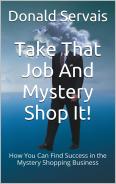
Want more help getting started? My book, Take That Job And Mystery Shop It!, walks you through finding assignments, completing shops, writing reports, and avoiding many of the mistakes new shoppers make.
What Does a Restaurant Mystery Shopper Observe?

Every assignment is different, but you may be asked to evaluate things such as:
- Cleanliness of the exterior and dining room
- How quickly you were greeted
- Friendliness of employees
- Accuracy of your order
- Food quality and presentation
- Suggestive selling or upselling
- Restroom cleanliness
- Employee names or descriptions
- Timing of different parts of the meal
- Checkout and payment
Some reports are relatively simple. Others require numerous questions and a detailed narrative describing your experience.
That's why I recommend looking at the reporting requirements before accepting an assignment whenever possible. A restaurant shop that sounds attractive can become much less attractive if the visit takes an hour and the report takes another hour.
Read the Restaurant Assignment Carefully
Following the instructions is critical.
An assignment might require one person while another requires two people. You could be instructed to order particular menu items or avoid others. There may be rules concerning alcoholic beverages, appetizers, desserts, payment methods, or the amount you can spend.
The assignment may also have a specific time window.
For example, a client might want the restaurant evaluated during its busy dinner period. If the instructions specify a particular day and time, completing the visit outside that window could make the report unusable.
Never assume that requirements from a previous restaurant shop apply to your next one.
Quick-Service Restaurant Assignments
You may see fast-food and similar assignments described as QSR, or quick-service restaurant, shops.
These assignments can involve the dining room, drive-through, or both.
You might be asked to observe whether an employee greeted you properly, repeated your order, suggested an additional item, provided the correct food, or completed the transaction within a certain amount of time.
Some assignments combine mystery shopping with an audit. You might begin as an ordinary customer and later identify yourself to a manager so you can complete additional observations or photographs.
Again, the instructions determine exactly what you're supposed to do.
Fine-Dining Mystery Shops
A fine-dining assignment can be much more detailed.
In addition to evaluating the food, you may have to record when you arrived, when you were greeted, when you placed your order, when each course arrived, whether your server checked back, and when you received the bill.
You could also be asked about the restaurant's appearance, music, lighting, restrooms, employees, and other details.
It can be tempting to look at an expensive restaurant assignment and think, “I'm getting a free dinner.”
Not necessarily.
You may have to pay the entire bill yourself and wait for reimbursement. The assignment may also have a reimbursement limit. If you spend more than the allowed amount, the difference may come out of your pocket.
Tips, parking, valet charges, taxes, and other expenses should never be assumed to be reimbursable. Read the assignment instructions to see exactly what is covered.
How Much Can a Restaurant Mystery Shopper Make?
There isn't one standard amount.
Some restaurant assignments offer a shopper fee in addition to reimbursement. Others primarily reimburse the required purchase. Bonuses may sometimes be offered when an assignment is difficult to fill.
I look at more than the advertised amount before deciding whether a restaurant shop is worthwhile.
Consider:
How far do I have to drive?
How much money do I have to spend upfront?
How much will be reimbursed?
Is there a separate shopper fee?
How long will the visit take?
How complicated is the report?
A higher reimbursement doesn't necessarily mean you're making more money. If you're reimbursed $75 for a required meal but receive no additional shopper fee, most of that $75 isn't income for your time—it's covering an expense you were required to make.
Keep Your Receipt
One of the easiest ways to create a problem with a restaurant assignment is to lose the receipt.
The receipt can document the location, date, time, items purchased, and amount spent. Many assignments require you to submit a clear photograph or digital copy with your report.
Before leaving, make sure you have it.
I also recommend checking the receipt while you're still at the restaurant. If something required is missing or unreadable, it's much easier to deal with the problem while you're there than after you've driven home.
Keep the original until the assignment has been accepted and you've been paid.
Restaurant Mystery Shopping Requires Good Notes
Restaurant assignments can involve a surprising number of details.
You may need several timings, employee names or descriptions, what was said during the interaction, what you ordered, how the food arrived, and what happened during checkout.
You have to remember all of that without making it obvious that you're evaluating the restaurant.
That's one reason good note-taking habits are so important.
And after the meal, your job isn't finished. You still have to complete the report accurately and submit it by the deadline.
If you'd like to see what that report can look like, I've posted part of an actual restaurant mystery shopping report I completed in Texas on my Mystery Shopping Sample Report page.
Being a restaurant mystery shopper can be enjoyable, and I've had some interesting experiences doing these assignments. Just remember that the meal is only one part of the job.
Read the instructions, make the required observations, keep your receipt, submit an accurate report—and make sure the assignment is worth your time before you accept it.
I've posted part of an actual restaurant mystery shopping report I completed in Texas.
About the Author
I'm Mystery Don (Donald J. Servais, Jr.), and I've completed mystery shopping assignments for restaurants, hotels, apartment communities, automobile dealerships, new-home builders, and other businesses.

I created MystShopper.com to share what I've learned from my own experiences, help new shoppers avoid common mistakes, and explain how legitimate mystery shopping really works.
I'm also the author of Take That Job And Mystery Shop It!, which includes beginner-friendly advice, real-world mystery shopping experiences, and a directory of more than 150 mystery shopping companies.
Drawing on my 45-year career in television, I've also written 7 Keys to Success in a Changing Television Industry, a guide for people interested in building a career in television and video.
My goal is simple: honest guidance without the hype.
We're always looking for new faces to visit different places.
Buy the Kindle eBook (instant download)
Buy the Paperback (best field manual)
Buy the Hardcover (durable reference copy)