Can Retirees Make Money
Mystery Shopping?
If you're retired or getting close to retirement, you may be wondering, can retirees make money mystery shopping? The answer is yes, though I wouldn't treat mystery shopping as a replacement for a full-time paycheck.
It can be a good way to earn extra money while deciding how much—or how little—you want to work.
Retirement may actually give you an advantage. Many mystery shopping assignments have to be completed during regular business hours, when other shoppers are working full-time jobs. If your schedule is flexible, you may be able to pick up assignments on weekdays that aren't convenient for everyone else.
You also bring something valuable to the job: life experience. If you've spent decades dealing with businesses, employees, salespeople, restaurants, banks, automobile dealers, and customer service departments, you already know quite a bit about how customers should be treated.
Mystery shopping gives you an opportunity to put that experience to work.
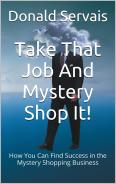
Want more help getting started? My book, Take That Job And Mystery Shop It!, walks you through finding assignments, completing shops, writing reports, and avoiding many of the mistakes new shoppers make.
Can Retirees Make Money Mystery Shopping Without Working Full-Time?

One of the nice things about mystery shopping is that you don't have to work a set schedule.
You decide which assignments you want to pursue. If you want to work three days this week and none next week, you can do that. If you're going on vacation or have family visiting, don't accept assignments during that period.
That flexibility is one reason mystery shopping can work particularly well in retirement.
Some assignments are simple. You might make a telephone call, visit a restaurant, evaluate a retail store, or ask an employee several questions. Others require more work. Apartment, new home, automotive, and video mystery shops can pay more, but they may also take considerably more time.
I'd start with the easier ones.
A simple restaurant or retail assignment allows you to learn how the company's instructions and reports work. After completing several shops, you can decide whether you want to tackle assignments with higher fees and more complicated requirements.
The report is something every new shopper should consider. You're not getting paid just to eat a hamburger or walk around a store. You're being paid to observe what happens and report it accurately.
You may have to remember the employee's name, what time you arrived, how long you waited, what questions you asked, what the employee said, and whether certain procedures were followed.
If you're comfortable paying attention to those details, you're already ahead of the game.
Pick Assignments That Fit Your Lifestyle
The question isn't whether retirees make money mystery shopping. It's whether a particular shop is worth your time.
Suppose you see a $25 assignment that's 40 miles away. By the time you drive there and back, complete the shop, and write the report, that $25 may not look so attractive.
But five shops in the same area could be a different story.
I've had opportunities to package several assignments together and receive additional travel money. That's where planning becomes important. You can build a route, complete several shops in the same trip, and make much better use of your time and mileage.
You may also find assignments that fit things you're already doing. If you're going across town anyway, check the job boards and see whether there's a shop nearby.
As you gain experience, you'll learn which assignments are worth taking and which ones you should leave for somebody else.
Don't feel obligated to accept everything a scheduler offers you. A good scheduler would rather hear an honest "I can't do that one" than assign the shop to someone who later cancels.
Retirees who enjoy traveling may find another advantage. Mystery shopping companies have assignments throughout the country. You might find opportunities along a route you're already planning to travel. Just make sure you understand the assignment and reporting deadline before building it into your trip.
You should also be comfortable using a computer or smartphone. Most companies post assignments online, and you generally submit reports through a website or app. You may have to upload photographs and receipts. You don't have to be a computer expert, but basic online skills are important.
And watch out for scams. Legitimate mystery shopping shouldn't begin with someone asking you to pay a registration fee or sending you a huge check to purchase gift cards. If an unexpected offer sounds unusually lucrative, investigate the company before doing anything with your money or personal information.
Is Mystery Shopping Worth Doing in Retirement?
For some people, the money is only part of the appeal.
Mystery shopping gives you somewhere to go, something different to do, and a reason to pay attention to what's happening around you. You may visit businesses you wouldn't otherwise visit and occasionally get reimbursed for meals or other purchases.
How much you do is entirely up to you.
Start with a couple of assignments close to home. Find out how long the visits and reports actually take. If you enjoy them, add a few more.
So, can retirees make money mystery shopping? Certainly. You probably won't get rich doing it, but that's not necessarily the point.
A few well-chosen assignments can put some extra money in your pocket, keep you active, and give you something interesting to do—without punching somebody else's time clock five days a week.
The Best Next Step
If this article "Can Retirees Make Money Mystery Shopping" helped, read these next:
- How to Start Mystery Shopping as a Complete Beginner
- How to Choose Your First Mystery Shopping Assignment
- Phone Mystery Shopping for Beginners
- Mystery Shopping for Beginners
About the Author
I'm Mystery Don, and I've completed mystery shopping assignments for restaurants, hotels, apartment communities, automobile dealerships, and new home builders.
I created this website to help people avoid the mistakes I've seen—and to show new shoppers how legitimate mystery shopping really works.
My book Take That Job And Mystery Shop It! lists over 150 mystery shopping companies to contact. I offer beginner-friendly tips and honest guidance without hype.
We're always looking for new faces to visit different places.
Buy the Kindle eBook (instant download)
Buy the Paperback (best field manual)
Buy the Hardcover (durable reference copy)