How Mystery Shopping Reports
Work for Beginners
If you’re new to the business, one part of mystery shopping can seem more intimidating than the assignment itself: the report.
You may finish the shop feeling pretty good about what happened, then open the questionnaire and realize there are pages of questions waiting for you.
That’s normal.
The report is where you explain what actually happened during the visit. In most cases, it has to be submitted fairly quickly—often within 12 to 24 hours—so the details are still fresh.
A mystery shopping report may ask when you arrived, how quickly you were greeted, whether the employee followed certain procedures, what you purchased, how clean the location was, and how the interaction ended. If an employee is wearing a name badge, you may need to provide the name. If there is no badge, the company may ask for a brief description instead.
That’s the basic idea behind how mystery shopping reports work: you observe the visit carefully, then turn those observations into useful information for the client.
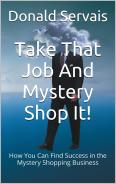
Want more help getting started? My book, Take That Job And Mystery Shop It!, walks you through finding assignments, completing shops, writing reports, and avoiding many of the mistakes new shoppers make.
How Mystery Shopping Reports Work in Real Assignments

Some reports are easy.
You may answer mostly yes-or-no questions and write a few short comments. Other assignments can require several hundred words of narrative.
That difference matters.
I’ve completed shops that paid reasonably well and required very little writing afterward. I’ve also done assignments where the visit was simple, but the report took much longer than I expected.
When that happens, you learn something.
I’ve completed shops where I decided afterward that the amount of narrative wasn’t worth the fee. I did the assignment correctly, submitted the report, and then avoided that particular shop in the future.
Your time matters.
A $20 shop with a 10-minute report may be a better deal than a $35 shop with an hour of writing.
This is why I recommend looking at the reporting requirements before accepting an assignment whenever the company allows you to see them.
The report is not an afterthought. It is a major part of the job.
Clients use these reports to evaluate customer service, identify problems, and sometimes train employees. A mystery shopper who notices everything but submits vague answers is not giving the client much value.
For example, if you write “The employee was nice,” you're not telling the client very much.
Give a blow-by-blow description of what happened:
“The employee smiled and extended her hand to greet me. I asked her if she had an apartment available. She told me she did and asked me questions about my needs."
That describes what happened instead of giving a general opinion.
A good report should be factual. Don’t guess. Don’t exaggerate. Don’t add something just because you think it makes the report sound better.
If you don’t remember a detail, don’t invent it.
The Report Really Starts Before the Shop
One of the best ways to understand how mystery shopping reports work is to realize that reporting begins before you ever enter the location.
Read the instructions first.
If the report is going to ask about timing, know that before you arrive. If you need the employee’s name, start looking for the name badge during the interaction. If you have to ask a specific question, don’t wait until you’re driving home to remember it.
Whenever possible, I like to review the questionnaire before doing the shop. That tells me what information I’ll need later.
After the visit, write down the important details as soon as you can. Names, times, prices, employee descriptions, and unusual comments can disappear from memory faster than you think.
If you complete several assignments in one day, they can start blending together.
Keep your notes simple and factual. You don’t need to write the entire report in the parking lot. Just capture the information you’re most likely to forget.
Then complete the report while the experience is still fresh.
You Don’t Have to Be a Professional Writer
Some beginners worry that they won’t be able to write a good report.
You don’t need fancy language.
You need to explain what happened clearly enough that someone who wasn’t there can understand the experience.
Short sentences are fine. Specific details are better than vague opinions. Chronological writing can also make things easier: I entered, I was greeted, I asked the required question, the employee responded, I completed the purchase, and I left.
That structure works.
The biggest mistakes usually come from waiting too long, forgetting key details, skipping parts of the questionnaire, or writing answers that contradict one another.
Before submitting the report, read it once from beginning to end. Check names, times, spelling, and anything that could cause confusion.
Once you understand how mystery shopping reports work, the process becomes much less intimidating.
The shop gives you the experience.
The report is how you prove what happened.
Your Best Next Step
If this article helped you understand how mystery shopping reports work, here’s where to go next:
- How to Start Mystery Shopping as a Complete Beginner
- Top Mystery Shopping Mistakes Beginners Can Avoid
- How Much Do Mystery Shoppers Really Make?
About the Author
I'm Mystery Don, and I've completed mystery shopping assignments for restaurants, hotels, apartment communities, automobile dealerships, and new home builders.
I created this website to help people avoid the mistakes I've seen—and to show new shoppers how legitimate mystery shopping really works.
My book Take That Job And Mystery Shop It! lists over 150 mystery shopping companies to contact. I offer beginner-friendly tips and honest guidance without hype.
We're always looking for new faces to visit different places.
Buy the Kindle eBook (instant download)
Buy the Paperback (best field manual)
Buy the Hardcover (durable reference copy)