What Skills Make a
Good Mystery Shopper?
If you're considering mystery shopping, you may wonder whether you have the right personality or experience for the job.
What skills make a good mystery shopper?
You don't need a background in retail, market research, or private investigation. Some of the best mystery shoppers are simply people who pay attention, follow directions, remember details, and can describe what happened accurately.
I've performed thousands of mystery shopping assignments over the years. Some were simple five-minute visits. Others involved detailed reports, video equipment, long drives, or complicated scenarios. Regardless of the assignment, many of the same basic skills are important.
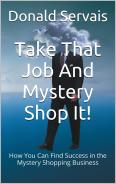
Want more help getting started? My book, Take That Job And Mystery Shop It!, walks you through finding assignments, completing shops, writing reports, and avoiding many of the mistakes new shoppers make.
So, What Skills Make a Good Mystery Shopper?

Start with being observant.
A mystery shopper will look for items a normal customer might overlook. Did an employee greet you? How long did you wait? Was the restroom clean? Did the salesperson ask a particular question? Was merchandise displayed properly?
You aren't trying to notice everything in the building. You're looking for the things the client specifically asked you to evaluate.
That's why reading your instructions before the assignment is so important.
Follow the Instructions
I've seen assignments with only a few requirements and others with pages of instructions.
Read them.
A company might require you to arrive during a particular time period, ask a certain question, purchase a specific item, get an employee's name, or spend a minimum amount of time in the location.
Missing one requirement can cause your report to be rejected.
Don't assume that because you've done the same type of shop before, the instructions haven't changed. Read them again.
Learn How to Remember Details
You may need to remember names, times, descriptions, conversations, and other details without making it obvious that you're evaluating the business.
Walking around with a clipboard probably isn't going to help your anonymity.
Find ways to remember information naturally. Sometimes you can make a discreet note on your phone when no one is watching. You may be able to excuse yourself to use the restroom and record a few details. On other assignments, you'll simply have to rely on your memory until you return to your car.
The important thing is not to give yourself away.
Act Like a Normal Customer
This is one of the most important mystery shopping skills.
Don't act like a mystery shopper.
If the instructions tell you to ask three questions, work them naturally into the conversation instead of firing them at the employee like an interrogation.
I've performed video mystery shops where remaining anonymous was especially important. Once an employee suspects they're being evaluated, their behavior can change completely. At that point, the client may no longer be seeing the normal customer experience they paid to evaluate.
The best mystery shopper usually blends in.
Write What Happened, Not What You Think Happened
Objectivity is another important skill.
Suppose an employee doesn't smile at you. Don't write that the employee was angry unless you have something factual to support it.
Instead, describe what happened.
The employee didn't smile. Their answers were brief. They didn't make eye contact.
Those are observations.
A mystery shopping company needs facts it can give its client, not guesses about what an employee was thinking.
You don't have to be a professional writer, but you should be able to explain what happened in clear sentences.
Be Dependable
Reliability will take you a long way in this business.
If you accept an assignment for Tuesday afternoon, do it Tuesday afternoon. If the report is due that evening, submit it that evening.
Schedulers have assignments they need completed for clients. A shopper who repeatedly cancels at the last minute creates problems.
Sometimes emergencies happen. If you can't complete an assignment, contact the scheduler as soon as possible instead of simply not showing up.
Build a reputation for doing what you say you're going to do.
Good Judgment Matters
As you gain experience, judgment becomes increasingly important.
Something unexpected will eventually happen.
The business may be closed. The employee you're supposed to shop may not be working. Your required product may be unavailable. Someone may become suspicious of you.
Don't automatically improvise and hope for the best. Follow the instructions and contact the mystery shopping company when necessary.
I've even walked away from an assignment when I believed continuing would produce something that wasn't useful to the client.
Getting paid for one shop isn't more important than protecting your reputation and the mystery shopping company's relationship with its client.
You May Be More Qualified Than You Think
If you've been assuming mystery shopping is only for highly experienced people, this is the part worth remembering:
A good mystery shopper is often just a careful, dependable person who pays attention and follows through. You don't need to be an actor.
In fact, trying too hard can make you stand out.
You don't need to be extremely outgoing. You don't need a sales background. You don't need years of mystery shopping experience.
You need to be believable as an ordinary customer.
What Skills Make a Good Mystery Shopper Over Time?
Experience helps.
After you've completed several assignments, you'll get better at remembering details, reading instructions, recognizing what information matters, and writing reports more quickly.
You'll also learn which assignments fit your personality and which ones don't.
Some shoppers enjoy restaurants. Others prefer apartments, banks, grocery stores, phone shops, or video assignments.
But the basic skills remain the same.
Pay attention. Follow the instructions. Stay anonymous. Report the facts. Meet your deadlines.
If you can do those things consistently, you already have many of the skills needed to become a good mystery shopper.

About the Author
I'm Mystery Don, and I've completed mystery shopping assignments for restaurants, hotels, apartment communities, automobile dealerships, and new home builders.
I created this website to help people avoid the mistakes I've seen—and to show new shoppers how legitimate mystery shopping really works.
My book Take That Job And Mystery Shop It! lists over 150 mystery shopping companies to contact. I offer beginner-friendly tips and honest guidance without hype.
We're always looking for new faces to visit different places.
Buy the Kindle eBook (instant download)
Buy the Paperback (best field manual)
Buy the Hardcover (durable reference copy)