Bank Mystery Shopping for Beginners
Bank Mystery Shopping for Beginners can sound serious, and for a lot of new shoppers, it also raises some understandable concerns.
You may be wondering:
- What happens in a bank mystery shop?
- Is this a legitimate kind of assignment?
- What if the instructions feel unusual?
- How do I tell the difference between a real bank shop and a scam?
Those are smart questions.
You do not need to ignore your instincts to explore bank mystery shopping. You just need to know what a real assignment looks like and what warning signs to watch for.
If you’re still getting oriented, start with the Mystery Shopping for Beginners for the bigger picture.
What Is Bank Mystery Shopping?

Bank mystery shopping is a type of mystery shopping where you evaluate the customer experience at a bank, credit union, or other financial-service location.
Depending on the assignment, you may be asked to observe things like:
- how you are greeted
- whether employees are professional and helpful
- how clearly products or services are explained
- how long you wait
- whether the staff follow company standards
- how the interaction ends
In simple terms, bank mystery shopping is still market research. The difference is that the customer experience being evaluated happens in a financial setting.
How Bank Mystery Shopping Works
A typical bank mystery shopping assignment may ask you to:
- visit a bank branch
- ask about a checking account, savings account, loan, or other service
- observe how the employee responds
- notice timing, professionalism, and clarity
- sometimes ask specific questions
- complete a report afterward
Some bank shops may be simple inquiries. Others may be more detailed.
The goal is usually to evaluate the service experience from the perspective of a normal customer.
There are some mystery shopping companies who only work with financial institutions. I've done plenty of these assignments. One assignment required me to ask about investments. Other assignments were a quick drive thru to evaluate the teller.
Why Bank Mystery Shopping for Beginners Can Feel Intimidating
A bank setting can feel more formal than a restaurant or retail store, so it makes sense that beginners sometimes feel extra cautious here.
You may worry about:
- saying the wrong thing
- forgetting details
- being asked questions you did not expect
- whether the assignment is even legitimate
- whether money will be involved
That hesitation is not a weakness.
When a mystery shop involves banks, checks, or money movement, being more careful is a very good thing.
What a Real Bank Mystery Shop May Ask You to Observe
Depending on the assignment, you may need to notice things like:
- how quickly someone greets you
- whether the employee is polite and professional
- whether your questions are answered clearly
- whether products or services are explained well
- whether the employee asks qualifying questions
- whether the branch appears organized and professional
- how the interaction ends
This is one reason bank mystery shopping is more than simply walking into a branch. You are paying attention with purpose.
Why Bank-Related Mystery Shopping Scams Deserve Extra Attention
This is where beginners need to slow down.
Some scam artists use the words mystery shopping to trick people into doing things involving:
- banks
- check-cashing locations
- money orders
- wire transfers
- gift cards
They may try to make the assignment sound official, urgent, and profitable.
But the real goal is often to get the victim to move money before realizing the check or payment was fake.
That is one of the biggest reasons bank mystery shopping makes people nervous — and honestly, it should make you careful.
A Major Red Flag: Receiving a Large Check Before the Assignment
One of the most common mystery shopping scams starts like this:
- you receive a check in the mail or by courier
- the check may be for hundreds or even thousands of dollars
- you are told to deposit or cash it
- you are instructed to keep part of it as your “pay”
- then you are told to send the rest to someone else
That “someone else” may be described as:
- a third party
- another evaluator
- a training contact
- a company representative
- a payment processor
This is a huge warning sign.
A legitimate mystery shopping company should not send you a large check before an assignment and tell you to move part of the money somewhere else.
Another Major Red Flag: Being Told to Buy Gift Cards or Money Orders
Scammers often want victims to:
- visit a bank or check-cashing location
- deposit or cash the fake check
- buy money orders
- buy gift cards
- send the gift card numbers or photos of the cards
- send money to an unknown third party
This is not a normal mystery shopping process.
If someone tells you to buy gift cards and send the numbers off the back, or to purchase money orders for someone you do not know, stop immediately.
Once those numbers are sent, the money is usually gone.
Why the Scam Works
These scams work because the check may look real at first.
A bank may accept the deposit initially, which can make people think the money has “cleared.” But that does not mean the check is actually good.
Later, the check bounces or is found to be fraudulent.
If you already used that money to buy gift cards, money orders, or send funds to someone else, you can be left responsible for the loss.
That means:
- the check disappears from your account
- the money you sent is gone
- you may be left covering the difference
That is why this kind of scam can be so damaging.
What a Legitimate Mystery Shopping Assignment Should Not Ask You to Do
A legitimate mystery shopping assignment should not ask you to:
- deposit a large check before starting
- cash a check and send part of the money elsewhere
- buy gift cards for an unknown third party
- send the numbers from the gift cards
- wire money to someone you do not know
- use money orders to transfer mystery shopping funds
- rush because “time is limited” or “the funds must be moved today”
If money movement is the real point of the assignment, that is a major warning sign.
What to Do If You Receive a Suspicious Check
If you receive a check tied to a supposed mystery shopping assignment and something feels off:
- do not spend the money
- do not buy gift cards
- do not send money orders
- do not send funds to an unknown third party
- pause and review the assignment carefully
- contact the company through a verified source if you are unsure
A good rule of thumb is simple:
If the assignment depends on you moving money, stop and question it.
Can Real Bank Mystery Shops Exist Without Being Scams?
Yes.
Real bank mystery shopping does exist.
But real bank shops are usually about evaluating:
- service
- professionalism
- communication
- wait times
- customer experience
They are not about turning you into a money-transfer middleman.
That is an important distinction.
A real shop focuses on the customer experience. A scam focuses on getting you to move money before the fake check falls apart.
Is Bank Mystery Shopping for Beginners a Good Place to Start?
It can be, but caution matters more here than in some other shop categories.
A beginner-friendly bank assignment should feel:
- clearly explained
- realistic in scope
- focused on observation and reporting
- free from pressure
- free from suspicious money movement
You do not need to prove anything by saying yes to an assignment that makes you uneasy.
A cautious no is better than an expensive yes.
You’re Allowed to Walk Away From Anything That Feels Off
If a bank mystery shopping assignment sounds confusing, rushed, or too focused on checks, transfers, or gift cards, you do not have to talk yourself into it.
You are allowed to stop.
You are allowed to ask more questions.
And you are allowed to walk away.
Protecting yourself is part of doing this wisely.
Bank Mystery Shopping for Beginners: Your Best Next Step
If this article "Bank Mystery Shopping for Beginners" helped, read these next:
- Mystery Shopping Scams: Red Flags Every Beginner Should Know
- Is Mystery Shopping Legit? What Beginners Need to Know
- How to Start Mystery Shopping as a Complete Beginner
- Mystery Shopping for Beginners
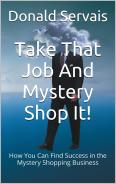
If you want beginner-friendly tips and honest guidance without hype, my book, "Take That Job And Mystery Shop It!" will give you the information you need to start. I'll also give you a list of over 150 mystery shopping companies to contact.
The mystery shopping business is always looking for new faces to visit different places.
Buy the Kindle eBook (instant download)
Buy the Paperback (best field manual)
Buy the Hardcover (durable reference copy)