Fee versus effort decision: How to tell if a mystery shop is actually worth it
The fee versus effort decision is the skill that separates profitable shoppers from burned-out ones.
It’s easy to look at a posting and think, “$25 for a quick visit—sure.” But mystery shopping doesn’t pay by the hour on the offer screen; it pays by the hour after you count drive time, waiting time, reporting, uploads, and the dreaded revision request.
This article gives you a simple way to evaluate any assignment in 2–3 minutes so you can accept fewer shops—but earn more from the ones you do.
If you’re still getting oriented, start with the Mystery Shopping for Beginners for the bigger picture.
Why this decision matters more than finding “more” assignments

Most shoppers don’t struggle because they can’t find shops. They struggle because they accept:
- low-fee shops with long, narrative reports
- assignments with tight windows that create stress
- reimbursement deals that look good but tie up cash flow
- high-revision shop types that quietly double the workload
A solid fee versus effort decision keeps your schedule clean, your shopper rating strong, and your side hustle enjoyable.
The “true cost” of a mystery shop (what to count every time)
Before you apply, estimate five things:
- Travel time (round trip, plus parking/walking)
- On-site time (ordering, waiting, interaction, receipt handling)
- Report time (including photo uploads and form complexity)
- Out-of-pocket cost (required purchase minus reimbursement rules)
- Revision risk (probability you’ll have to fix/redo parts of the report)
If you skip #3 and #5, your numbers will be wildly optimistic—and your results will feel disappointing.
Fee versus effort decision: the 3-number quick calculator
Use these three numbers to decide “yes/no” fast.
1) Total time (in hours)
Estimate conservatively:
- Travel + on-site + report + uploads
- Add a buffer (10–20%) if you’re new to that shop type
2) Total payout
Use the real payout, not the “headline”:
- Fee (your guaranteed pay for completing the shop)
- Reimbursement (only if you can meet the rules easily and you’re willing to front the money)
If reimbursement has fine print (specific items, caps, “must show item in photo”), treat it cautiously.
3) Your minimum acceptable hourly rate
Pick a number that makes this worth doing. Many shoppers start with a simple rule like:
- Weeknight shop minimum: higher (because time is scarce)
- Weekend route minimum: moderate (because you can batch)
Then calculate:
Hourly Return = (Total payout − out-of-pocket costs) ÷ total hours
That’s the heart of the fee versus effort decision.
A practical rule-of-thumb (so you don’t overthink)
If you don’t want math, use this quick filter:
- Green light: short report + short travel + clear instructions
- Yellow light: moderate report or moderate travel (only accept if payout is higher)
- Red light: long narrative report, strict proof requirements, or unclear instructions (skip unless the pay is excellent and you have time)
Most “bad deals” reveal themselves when you ask: How long will the report really take?
Two examples (the same fee, two very different realities)
Example A: Looks small, but it’s clean profit
- Fee: $20
- Travel: 10 minutes each way
- On-site: 15 minutes
- Report: 15 minutes (mostly checkboxes)
- Out-of-pocket: $0
Total time: ~55 minutes (0.9 hours)
Hourly return: ~$22/hour
This is often a smart “steady-flow” shop—especially if it’s near errands.
Example B: Looks fine, but it’s a time sink
- Fee: $20
- Travel: 25 minutes each way
- On-site: 20 minutes
- Report: 35 minutes (long narrative + uploads)
- Revision risk: moderate
Total time: ~1 hr 45 min (1.75 hours)
Hourly return: ~$11/hour before revisions
Same fee. Completely different outcome. A good fee versus effort decision prevents these slow leaks.
The hidden multiplier: revision risk
Revisions turn one shop into two work sessions. These factors raise revision risk:
- long narrative sections (“describe everything”)
- many required photos/screenshots
- strict timing requirements
- confusing reimbursement rules
- you’re new to the client or form
If you suspect high revision risk, either (a) demand higher pay, or (b) choose a simpler shop.
Fee vs. effort “deal breakers” (skip these fast)
Decline if you see:
- any “money movement” (depositing checks, wiring funds, gift card codes)
- vague instructions paired with tight deadlines
- unclear pay timelines or payment method
- “all-or-nothing” packaged offers where one failure risks the whole payout
These aren’t just low value—they can be high headache.
How to make more shops “worth it” (without chasing higher fees)
You can improve your fee versus effort decision results by lowering effort:
- Use a timing/notes template (arrival, greeting, order, receipt, exit)
- Submit same-day whenever possible
- Batch two shops on one route
- Avoid shop types that repeatedly trigger revisions for you
- Keep a consistent receipt/photo routine
As your reporting speed improves, more assignments become profitable.
Your Best Next Step
A strong fee versus effort decision isn't pessimism—it’s professionalism. You’re protecting your limited time, building a reliable track record, and choosing assignments that actually reduce financial stress instead of creating it.
The best “shortcuts” are the ones that remove friction without removing compliance: a simple checklist, a timing template, receipt discipline, and same-day reporting. Done right, QSR shops become quick, repeatable, and profitable.
If this article helped, read these next:
- Packaged Shop Offers Explained (Mystery Shopping)
- Applying for Assignments Faster
- Building a Steady Assignment Flow
- Mystery Shopping Email Red Flags: How to Spot Scam Offers Before You Reply
- Mystery Shopping for Beginners
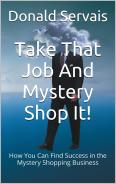
If you want beginner-friendly tips and honest guidance without hype, my book, "Take That Job And Mystery Shop It!" will give you the information you need to start. I'll also give you a list of over 150 mystery shopping companies to contact.
The mystery shopping business is always looking for new faces to visit different places.
Buy the Kindle eBook (instant download)
Buy the Paperback (best field manual)
Buy the Hardcover (durable reference copy)