How Scammers Impersonate Brands (and How to Spot It Fast)
People who start mystery shopping should be aware of how scammers impersonate brands to steal your trust.
When you see a familiar company name, logo, or “official” email signature, your brain wants to relax. That’s exactly the moment fraudsters aim for. The truth is, scammers impersonate brands because it’s the quickest shortcut to credibility—and the fastest way to get you to click, pay, or share personal info.
Below are the most common impersonation tactics, what they look like in the real world (including side-hustle and mystery-shopping style pitches), and a practical verification checklist.
If you’re still getting oriented, start with the Mystery Shopping for Beginners for the bigger picture.
The 7 most common ways how scammers impersonate brands

Scam artists cause confusion to people who are trying to get ahead in their lives. They also frustrate mystery shopping companies. Real people and real company names are used by scammers to sound more convincing. Here are 7 items to look out for.
1) Lookalike domains
Scam artists want to trick your vision with domain names that look almost right, such as:
- swapped letters: scrarn.com ("r n" instead of m)
- extra words: brand-support.com, brand-verification.com
- different extensions: .co instead of .com
What it looks like: an email “from” the brand, but the sender address doesn’t match the brand’s real domain.
2) Display-name spoofing (it shows the brand, but isn’t)
Your inbox might show: “Amazon Support” (or any brand name) while the actual sender is unrelated.
Do this: click/tap the sender name to reveal the real email address.
3) Fake “support numbers” and fake help desks
Scammers create pages and ads that rank for “Brand + customer service number.” Then they “help” you by:
- asking for login codes
- requesting remote access
- pressuring you into “verification” payments
Rule: never trust a support number from a random search result or social post—verify it from the brand’s official site. Legitimate mystery shopping companies will never ask you for login codes, passwords, or payments of any kind.
4) Brand-like landing pages (logos, colors, and confidence)
A convincing fake page can mimic:
- checkout screens
- account verification pages
- job application portals
- “payment failed—update your billing” pages
Tip: if the page is asking you to confirm sensitive information, especially a social security number, slow down. Scammers impersonate brands precisely at high-pressure moments.
5) “You’ve been selected” job/assignment bait (common in side hustles)
This shows up a lot in gig-style scams, including fake mystery shopping pitches:
- “You’ve been approved as a shopper/agent.”
- “We’ll send a check to evaluate money transfer service.”
- “Buy gift cards to test cashier compliance.”
If the “assignment” involves moving money (depositing checks, wiring funds, buying gift cards and sharing codes), treat it as a hard stop.
Also, mystery shopping companies do not send checks worth thousands of dollars before doing any work. The check may look real, but it's a fake. Don't cash it.
6) SMS/text impersonation (“Your package is held…” / “Account locked…”)
Smishing texts create urgency:
- delivery failures
- suspicious login attempts
- account suspension
- “confirm within 10 minutes”
Safe response: don’t click the link. You'll be inviting malicious software into your device. Open your browser/app and navigate to the brand the normal way.
7) Social media impersonation (fake pages + DMs)
A fake account can:
- copy the brand’s logo and name closely
- buy ads
- DM you with “refunds,” “prizes,” or “urgent verification”
Quick check: click the account details (creation date, follower patterns, verified status, and official links).
A fast verification checklist (before you click, pay, or reply)
When you suspect impersonation, run this quick process:
- Verify the sender domain (not the display name).
- Don’t use the link they gave you. Open a new tab and go to the official site manually.
- Cross-check contact methods (phone/email/chat) from the brand’s official “Contact” page.
- Search for consistent signals: brand name + “impersonation scam” or “phishing” + the exact wording used.
- Watch for the money triggers: gift cards, wire transfers, crypto, “refundable” verification charges, or check-deposit instructions.
If even one of those money triggers appears, assume it’s a scam until proven otherwise.
Why this works: the psychology behind brand impersonation
Impersonation scams aren’t “smart tech”—they’re smart timing. The goal is to hit you when you’re:
- busy and skimming
- worried (account locked, refund pending)
- excited (job/assignment approved)
- rushed (limited-time action)
That’s how scammers impersonate brands instead of inventing new ones: your trust does the heavy lifting.
Bottom line
Brand impersonation isn’t going away. The good news is that you don’t need advanced security skills to protect yourself—just a repeatable habit of verifying the source and refusing urgency + money-moving requests.
Your Best Next Step
If this article "Bank Mystery Shopping for Beginners" helped, read these next:
- Mystery Shopping Scams: Red Flags Every Beginner Should Know
- Is Mystery Shopping Legit? What Beginners Need to Know
- How to Start Mystery Shopping as a Complete Beginner
- Mystery Shopping for Beginners
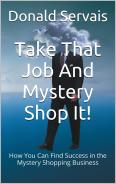
If you want beginner-friendly tips and honest guidance without hype, my book, "Take That Job And Mystery Shop It!" will give you the information you need to start. I'll also give you a list of over 150 mystery shopping companies to contact.
The mystery shopping business is always looking for new faces to visit different places.
Buy the Kindle eBook (instant download)
Buy the Paperback (best field manual)
Buy the Hardcover (durable reference copy)