How to Choose the Best
Mystery Shopping Route
How to Choose the Best Mystery Shopping Route can make a bigger difference than many beginners expect.
A lot of shoppers focus on the assignments themselves but forget that route planning affects:
- time
- energy
- fuel costs
- stress
- whether the day feels efficient or chaotic
You may be wondering:
- Which shop should I do first?
- How do I group locations together?
- When does a route stop being worth it?
- How do I avoid wasting time driving back and forth?
Those are smart questions.
You do not need a perfect route. You need one that makes the day feel more efficient, realistic, and manageable.
If you’re still getting oriented, start with the Mystery Shopping for Beginners for the bigger picture.
Why Route Planning Matters

A mystery shopping route is not only about distance.
It also affects:
- how tired you feel
- whether you arrive rushed
- how much dead time sits between shops
- how realistic the whole schedule is
- whether the assignments still feel worth doing
A poorly planned route can turn decent assignments into a frustrating day.
A better route can make the same assignments feel much more manageable.
Start With the Full Picture
Before choosing a route, gather the details for each assignment:
- location
- time window
- shop type
- expected duration
- whether a purchase is required
- whether notes or uploads need to happen right after
- how detailed the report is likely to be
This helps you see the real shape of the day.
Without that, it is easy to build a route that looks efficient on a map but fails in real life.
Group Shops by Area First
One of the simplest route-planning habits is to group assignments by area.
That means looking for shops that are:
- close to one another
- easy to do in sequence
- realistic to complete in the same time block
This matters because long zig-zag driving often adds more stress than shoppers expect.
A tighter area group usually creates:
- less travel time
- less backtracking
- better focus
- a more realistic pace
Let Time Windows Shape the Route
Not every route should start with the closest shop.
Sometimes the best route starts with the assignment that has the tightest time requirement.
Look at:
- earliest start times
- latest completion windows
- stores or restaurants that are busier at certain hours
- assignments that depend on lunch, dinner, or business traffic
Then build the rest of the route around those anchors.
That usually works better than planning only by distance.
How to Choose the Best Mystery Shopping Route for the Real Day, Not the Ideal Day
A common route-planning mistake is building for the ideal version of the day.
That means assuming:
- no traffic
- no delays
- no parking problems
- no longer-than-expected interactions
- no need for quick notetaking between shops
A better route assumes real life will happen.
How to Choose the Best Mystery Shopping Route usually comes down to leaving enough breathing room that one delay does not ruin the whole chain.
That kind of realism protects both your schedule and your stress level.
Mix Shop Types Carefully
Not every assignment fits smoothly beside every other assignment.
For example:
- a quick retail visit may pair well with another short shop nearby
- a long apartment or hotel shop may need more space around it
- a video shop may require more setup and post-shop attention
- a drive-thru shop may be easier to place between larger tasks
Think about mental load, not just geography.
A route that mixes too many heavy assignments can feel more draining than the mileage suggests.
Leave Room for Notes and Receipts
A route is not just driving and shopping.
You may also need time for:
- quick notes in the car
- receipt checks
- reviewing the next assignment
- resetting mentally before the next stop
If you schedule assignments too tightly, these small but necessary steps get squeezed out.
That usually creates more stress later when it is time to write reports.
A better route gives you small pockets of recovery and organization time.
Watch the Total Time, Not Just the Number of Shops
A route with five shops is not automatically better than a route with three.
What matters more is:
- total travel time
- total shop time
- total report and note burden
- how the assignments fit together
- whether the route still feels worth it after the full effort is added up
Sometimes fewer, better-grouped shops create a stronger day than a crowded route that looks productive on paper.
That is an important part of How to Choose the Best Mystery Shopping Route. A good route is efficient, not just packed.
A Simple Route Planning Method
A beginner-friendly method looks like this:
- list all possible assignments
- note each location and time window
- group nearby shops together
- place the tightest time-window shops first
- estimate drive time realistically
- leave room for notes and delays
- cut anything that makes the route feel too crowded
This creates a route that is more likely to work in practice, not just in theory.
What to Avoid
Try to avoid:
- building a route only by distance
- ignoring time windows
- overpacking the day
- assuming every stop will go quickly
- forgetting time for notes, receipts, or report prep
- saying yes to an extra shop that throws the whole route off balance
Most route problems come from unrealistic stacking, not from a bad map.
This is another reason How to Choose the Best Mystery Shopping Route matters so much. A good route protects your time before the day even begins.
You Do Not Need to Max Out Every Route
If a route starts feeling crowded, stressful, or too tightly packed, you are allowed to scale it back.
You do not need to cram in every possible assignment to have a productive day.
A smaller, smoother route is often better than a larger, messier one.
That is not wasted potential.
That is good planning.
Your Best Next Step
If this article helped, read these next:
- Time Per Assignment Estimate for Mystery Shopping
- How to Know If a Mystery Shopping Assignment Is Worth It
- How to Avoid Beginner Mistakes That Waste
- Mystery Shopping for Beginners
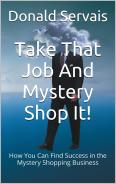
If you want beginner-friendly tips and honest guidance without hype, my book, "Take That Job And Mystery Shop It!" will give you the information you need to start. I'll also give you a list of over 150 mystery shopping companies to contact.
The mystery shopping business is always looking for new faces to visit different places.
Buy the Kindle eBook (instant download)
Buy the Paperback (best field manual)
Buy the Hardcover (durable reference copy)