Mystery Shopping Lingo Explained
Mystery Shopping Lingo Explained can help you understand assignment listings, emails, and mystery shopping company websites without wondering what all those unfamiliar terms mean.
When I started mystery shopping, I had to learn the terminology just like everyone else. Fortunately, most of it isn't complicated once you've completed a few assignments.
Understanding the language is important. Confusing a shopper fee with a reimbursement, misunderstanding a shop window, or thinking you've been assigned a shop when you've only applied for it can cost you time and money.
Here are some of the terms you're most likely to encounter.
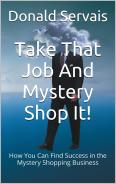
Want more help getting started? My book, Take That Job And Mystery Shop It!, walks you through finding assignments, completing shops, writing reports, and avoiding many of the mistakes new shoppers make.
Mystery Shopping Lingo Explained: Who's Who?

MSC (Mystery Shopping Company)
The company that recruits shoppers, assigns shops, collects reports, and works with the client. You may register with many MSCs as you build your mystery shopping business.
Client
The business being evaluated. It could be a restaurant, hotel, retailer, apartment community, automobile dealership, bank, or another type of business.
Scheduler / Shopper Coordinator
The person responsible for getting assignments filled. I've learned that being dependable matters. Schedulers appreciate shoppers who complete assignments correctly and on time.
Shopper / Evaluator
That's you. Different companies use different names for the independent contractors who perform assignments.
Assignment Terms You Should Know
Assignment / Shop / Visit
The mystery shopping job you've agreed to complete.
Scenario
What you're instructed to do during the assignment. You might ask about a product, inquire about an apartment, order a particular meal, or request information about a service.
Shop Window
The period when you're permitted to complete the assignment. If the instructions say Tuesday between 11 a.m. and 2 p.m., don't assume Tuesday evening is acceptable.
Report Deadline / Due Date
When your completed report must be submitted. Pay attention to this before accepting the assignment.
Location or Store Number
The identification number for a particular location. Always make sure you're visiting the correct business.
Mystery Shopping Lingo About Money
Shopper Fee / Shop Fee
The amount you're paid for successfully completing the assignment and acceptable report.
Reimbursement
Money you're repaid for a required purchase. For example, a restaurant shop might reimburse your meal up to a specified amount.
A reimbursement isn't the same thing as a shopper fee.
Reimbursement Cap
The maximum amount the company will reimburse. If the limit is $20 and you spend $28, don't automatically expect the additional $8 to be reimbursed.
Bonus / Incentive
Additional money offered for an assignment. Companies may add bonuses when they're having difficulty finding someone to complete a shop.
Payment Schedule
When the mystery shopping company normally pays shoppers. Companies have different payment schedules, so don't assume you'll be paid immediately after your report is accepted.
Reporting Terms
Questionnaire / Report
The form you complete after the assignment. It might contain yes-or-no questions, ratings, written explanations, or narratives.
Narrative
The written portion where you describe what happened. Some assignments require very little narrative. Others require considerably more.
Proof / Documentation
Something required to verify part of the assignment. Depending on the shop, that could include a receipt, photograph, business card, screenshot, or another required item.
Quality Control / Editor
The person or process that reviews your report after submission. You may be contacted if something is missing or unclear.
Revision / Clarification
A request for additional information or a correction to your report. Respond promptly while the assignment is still fresh in your mind.
Rejected Report
A report the company doesn't accept. Depending on the circumstances and company rules, that could affect your payment.
Reporting Terms
Questionnaire / Report
The form you complete after the assignment. It might contain yes-or-no questions, ratings, written explanations, or narratives.
Narrative
The written portion where you describe what happened. Some assignments require very little narrative. Others require considerably more.
Proof / Documentation
Something required to verify part of the assignment. Depending on the shop, that could include a receipt, photograph, business card, screenshot, or another required item.
Quality Control / Editor
The person or process that reviews your report after submission. You may be contacted if something is missing or unclear.
Revision / Clarification
A request for additional information or a correction to your report. Respond promptly while the assignment is still fresh in your mind.
Rejected Report
A report the company doesn't accept. Depending on the circumstances and company rules, that could affect your payment.
Scheduling Terms
Apply / Request
You've asked for the assignment, but you don't necessarily have it yet.
Assigned
The mystery shopping company has awarded you the shop. Once it's assigned, you're responsible for completing it according to the instructions.
That's an important distinction for beginners.
Self-Assign
Some companies allow qualified shoppers to select certain assignments without waiting for a scheduler to approve the request.
Route Shopping
Completing several assignments during one trip. I've done routes that allowed me to complete multiple shops while traveling through different locations. A good route can save driving time, but you still need to make sure every shop window and reporting deadline works.
Rotation
A rule limiting how frequently you can shop the same location. For example, you may have to wait a certain amount of time before returning to the same business.
Reveal Shop
An assignment where you identify yourself as the evaluator at some point, usually because you're required to perform an audit or another task after the mystery portion is completed.
Compliance Shop
An assignment designed to determine whether employees follow a particular policy or requirement, such as requesting identification when required.
Put the Lingo to Work
The real purpose of Mystery Shopping Lingo Explained isn't memorizing definitions.
It's understanding what you're agreeing to do.
Before accepting an assignment, make sure you can answer these questions:
- What am I required to do?
- When can I complete the shop?
- When is the report due?
- What's the shopper fee and reimbursement?
- What receipts, photographs, or other proof will I need?
If you understand those five things, you've already eliminated many of the surprises that cause problems for new shoppers.
Don't worry if some mystery shopping terminology seems unfamiliar at first. After you've completed several assignments, words such as shop window, reimbursement, narrative, scheduler, self-assign, rotation, and route will become second nature.
That's why Mystery Shopping Lingo Explained is useful when you're beginning: learn the terminology now, and you'll have a much easier time understanding assignments later.
For additional reading, read my articles:
Mystery Shopping for Beginners
How to Choose Your First Mystery Shopping Assignment
Mystery Shopping Mistakes Beginners Can Avoid
About the Author
I'm Mystery Don (Donald J. Servais, Jr.), and I've completed mystery shopping assignments for restaurants, hotels, apartment communities, automobile dealerships, new-home builders, and other businesses.

I created MystShopper.com to share what I've learned from my own experiences, help new shoppers avoid common mistakes, and explain how legitimate mystery shopping really works.
I'm also the author of Take That Job And Mystery Shop It!, which includes beginner-friendly advice, real-world mystery shopping experiences, and a directory of more than 150 mystery shopping companies.
Drawing on my 45-year career in television, I've also written 7 Keys to Success in a Changing Television Industry, a guide for people interested in building a career in television and video.
My goal is simple: honest guidance without the hype.
We're always looking for new faces to visit different places.
Buy the Kindle eBook (instant download)
Buy the Paperback (best field manual)
Buy the Hardcover (durable reference copy)