Creating a Shopper Profile (What Legit Mystery Shopping Sites Should Ask For—and When)
Creating a shopper profile is usually your first “trust test” with a mystery shopping company. Done right, it helps you qualify for assignments and get paid. Done carelessly, it can expose your identity (or waste your time on a low-quality—or fake—operation).
Below is what legitimate mystery shopping websites commonly ask for, what’s optional, what’s a red flag, and when it’s reasonable to provide sensitive info like your Social Security number.
> Important note (privacy + compliance): I can’t recommend entering fake information (including “all zeros” for a Social Security number). Using a false SSN can create legal, tax, and payment problems and may violate a company’s terms. The safer move is to delay providing sensitive info until it’s truly needed—or choose a different company if they demand it too early.
If you’re still getting oriented, start with the Mystery Shopping for Beginners for the bigger picture.
1) The basics: information most legitimate sites will request up front

These are normal for an initial shopper profile:
- Name (as you want it displayed in the portal; legal name may be needed later for payment)
- Email address (preferably one dedicated to side-hustle work)
- Phone number (some shops require scheduling calls or last-minute confirmations)
- Mailing address (often needed for tax forms, payment, or location-based matching)
- General location (city/ZIP/postal code) to match you with nearby assignments
- Age confirmation (some shops involve age-restricted products/venues)
- Basic demographic qualifiers (optional, but common: household size, children, etc., depending on shop types)
Best practice: Give accurate info, but keep it minimal. If a field isn’t required, you can often skip it until you trust the company.
2) Shopper qualifications that are normal (and often helpful)
Legitimate mystery shopping companies may ask about:
- Transportation (car access, willingness to travel)
- Device access (smartphone, ability to take photos, scanner app, etc.)
- Availability windows
- Languages
- Comfort with specific shop types (phone shops, restaurant shops, bank audits, etc.)
These are generally used to match you to assignments you can actually complete. Mystery shopping companies especially like many different area codes you can travel to.
3) Payment profile information: what’s normal vs. premature
What’s normal after you’ve been approved and/or completed a shop
To pay you and handle tax reporting, a legitimate company may eventually need:
- Payment method details (PayPal email, direct deposit info, or mailed check info)
- Tax information (often via a W-9 in the U.S.)
- Legal name/business name (for tax forms)
Where the Social Security number fits (U.S.)
Many legitimate U.S. companies will request a Social Security number because they may need to issue a 1099 (depending on your earnings and current rules). You will not be paid without providing this information.
Reasonable approach:
- It’s often sensible to wait to provide SSN/tax data until you’re confident the company is legitimate and you’re actually going to be paid (for example, when setting up payment after your first completed assignment, or when the company triggers tax onboarding).
- If you haven’t done any work, there’s usually no urgent reason for a company to have your SSN immediately.
Hard line: If a site demands your SSN at the application stage as a non-negotiable requirement—and won’t let you proceed without it—consider moving on to a different company unless you’ve already verified that they’re legitimate and you’re comfortable with their data handling.
> If you want an extra layer of protection, you can also ask:
> “Can I complete my shopper profile and accept assignments first, and submit tax details only when payment is set up?”
> A legitimate operation will usually give a clear, professional answer.
4) What you should not have to provide when creating a shopper profile
Be cautious if a “mystery shopping” site asks for any of the following before you’ve built trust:
- Bank login credentials (never EVER)
- Photo of your Social Security card (almost never needed)
- Driver’s license upload (sometimes used for age/identity verification, but should be rare and justified)
- Payment to “join” (high-risk; most reputable companies don’t charge shoppers to access basic work)
- Requests to deposit checks, buy gift cards, or move money around (scam patterns)
5) Encrypted websites: what HTTPS means—and what it doesn’t mean
What encryption is (in plain English)
An encrypted website uses HTTPS, which helps protect data in transit (so your information is less likely to be intercepted while you’re typing/sending it).
What to look for:
- The URL starts with https://
- A lock icon appears in the browser address bar
How to check encryption correctly
When you’re on the login or application page:
- Confirm https:// is present on the actual page where you type sensitive info (not just the homepage).
- Click the lock icon to view certificate details (varies by browser).
- Make sure the domain name is exactly correct (no extra words, misspellings, or odd endings).
The big caution: HTTPS does not prove legitimacy
Scammers can also use HTTPS. Encryption only tells you the connection is protected—not that the business is trustworthy.
So, pair HTTPS with legitimacy checks like:
- Clear contact information and policies
- A consistent business footprint online
- Non-pushy communication
- Normal payment/tax processes (not weird money handling)
6) A practical “safe profile setup” workflow
If you want a simple, repeatable way of creating a shopper profile, do the following:
- Create the profile with basic info only (name, email, location, availability).
- Verify the company (website footprint, contact info, independent mentions, scam reports).
- Accept one small, low-risk assignment (no money-handling tasks).
- Only then set up payment details—and provide SSN/tax info when it’s clearly tied to payment processing.
This keeps you moving forward without handing over your most sensitive data too early.
7) Bottom line: your profile is a business asset—treat it like one
A shopper profile should help you get matched to assignments and paid reliably. If a company’s signup process feels intrusive, rushed, or confusing—trust that signal.
Rule of thumb:
- Basic profile info first
- Sensitive tax/payment info later
- Walk away if the site demands too much too soon
Mystery shopping companies will often ask you for a writing sample. Don't overthink this. Write three or four sentences about your last visit to a convenience store. They're looking for good grammar, punctuation, and spelling.
Next Best Step for Beginners
If this article "Creating a Shopper Profile" helped, read these next:
- Mystery Shopping Scams
- How Scammers Impersonate Brands
- How to Start Mystery Shopping as a Complete Beginner
- Mystery Shopping for Beginners
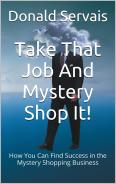
If you want beginner-friendly tips and honest guidance without hype, my book, "Take That Job And Mystery Shop It!" will give you the information you need to start. I'll also give you a list of over 150 mystery shopping companies to contact.
The mystery shopping business is always looking for new faces to visit different places.
Buy the Kindle eBook (instant download)
Buy the Paperback (best field manual)
Buy the Hardcover (durable reference copy)